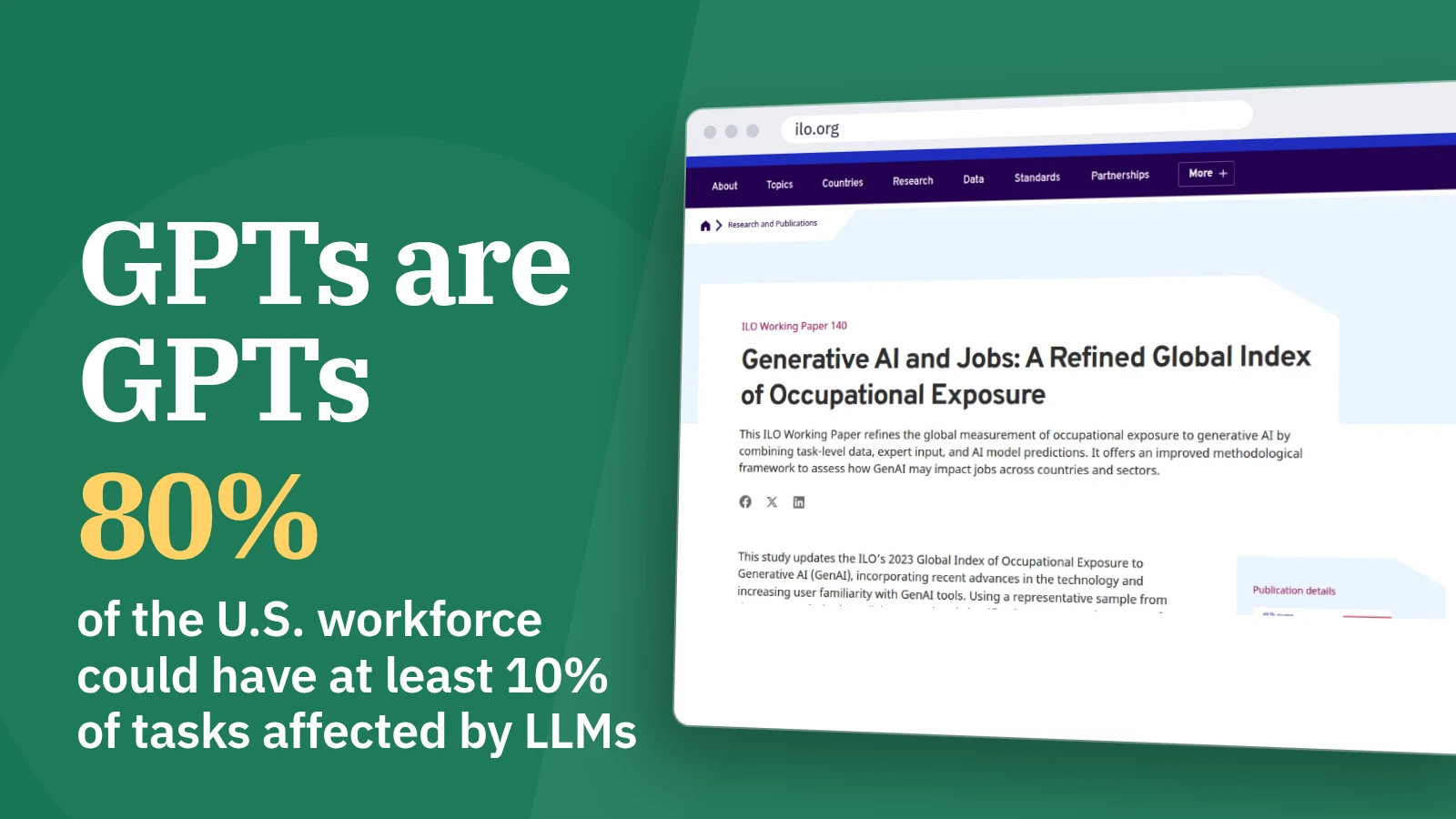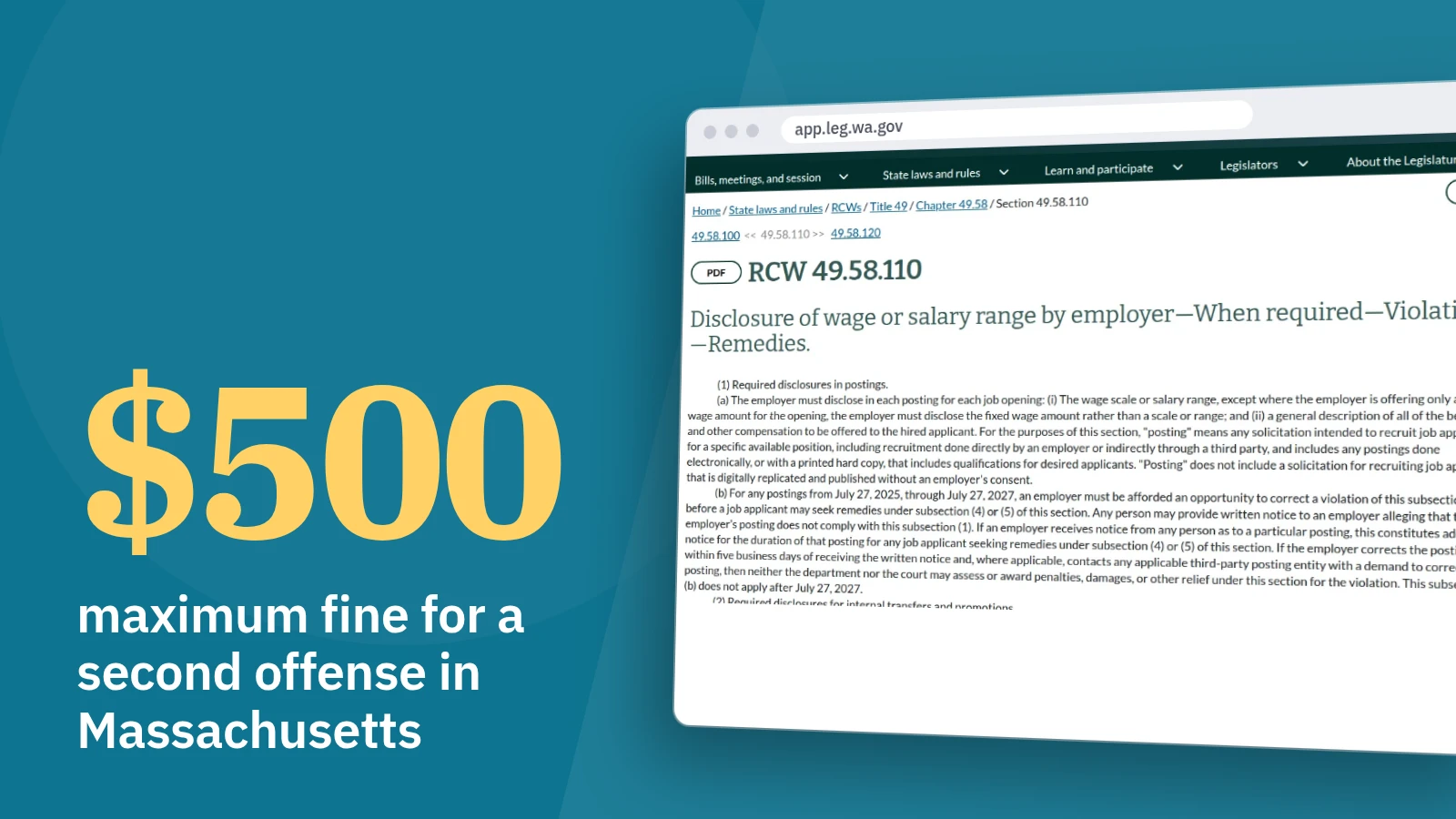
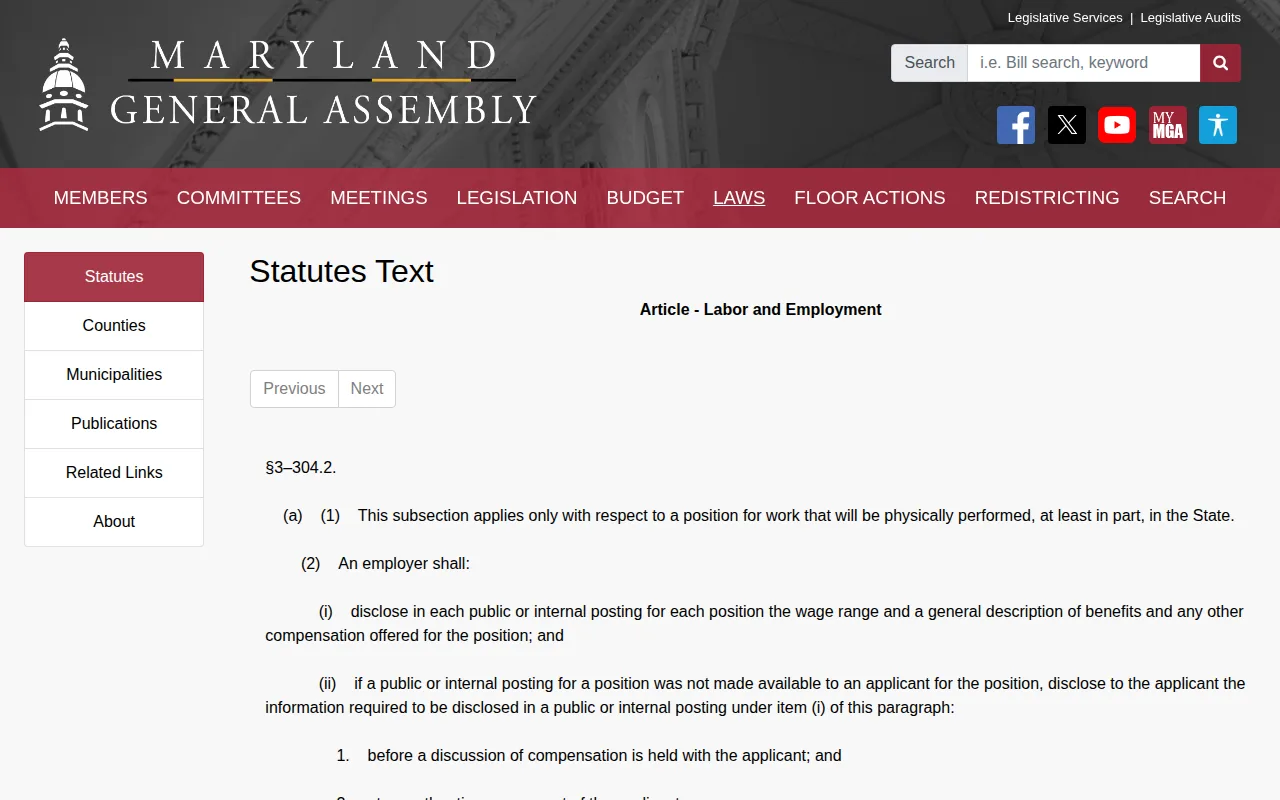
Before you negotiate pay in Washington, Maryland, Minnesota, New York or Massachusetts, check the posting: these states’ official pages require employers to publish compensation information, with the details depending on the state. Washington’s RCW 49.58.110 reaches employers with 15 or more employees and calls for the wage scale or salary range in each posting for each job opening. Maryland’s section 3-304.2 mainly asks for disclosure in each public or internal posting, and it adds a fallback: if no posting was made available to an applicant, the information must be given before a discussion of compensation is held with that applicant (mgaleg.maryland.gov).
What the table shows
| Law or state guidance | Read on | Who must comply | What must be disclosed | When it must be disclosed |
|---|---|---|---|---|
| RCW 49.58.110 | Washington RCW 49.58.110 | employers with 15 or more employees | The wage scale or salary range | in each posting for each job opening |
| §3–304.2. | Maryland Labor and Employment § 3-304.2 | — | the wage range and a general description of benefits and any other compensation offered for the position | before a discussion of compensation is held with the applicant |
| 181.173 SALARY RANGES REQUIRED IN JOB POSTINGS. | Minnesota Statutes 181.173 | employs 30 or more employees at one or more sites in Minnesota | the starting salary range, and a general description of all of the benefits and other compensation | in each posting for each job opening |
| Pay Transparency / Department of Labor | New York State Department of Labor, pay transparency (Labor Law § 194-b) | New York State businesses with four or more employees | job descriptions and list compensation ranges | — |
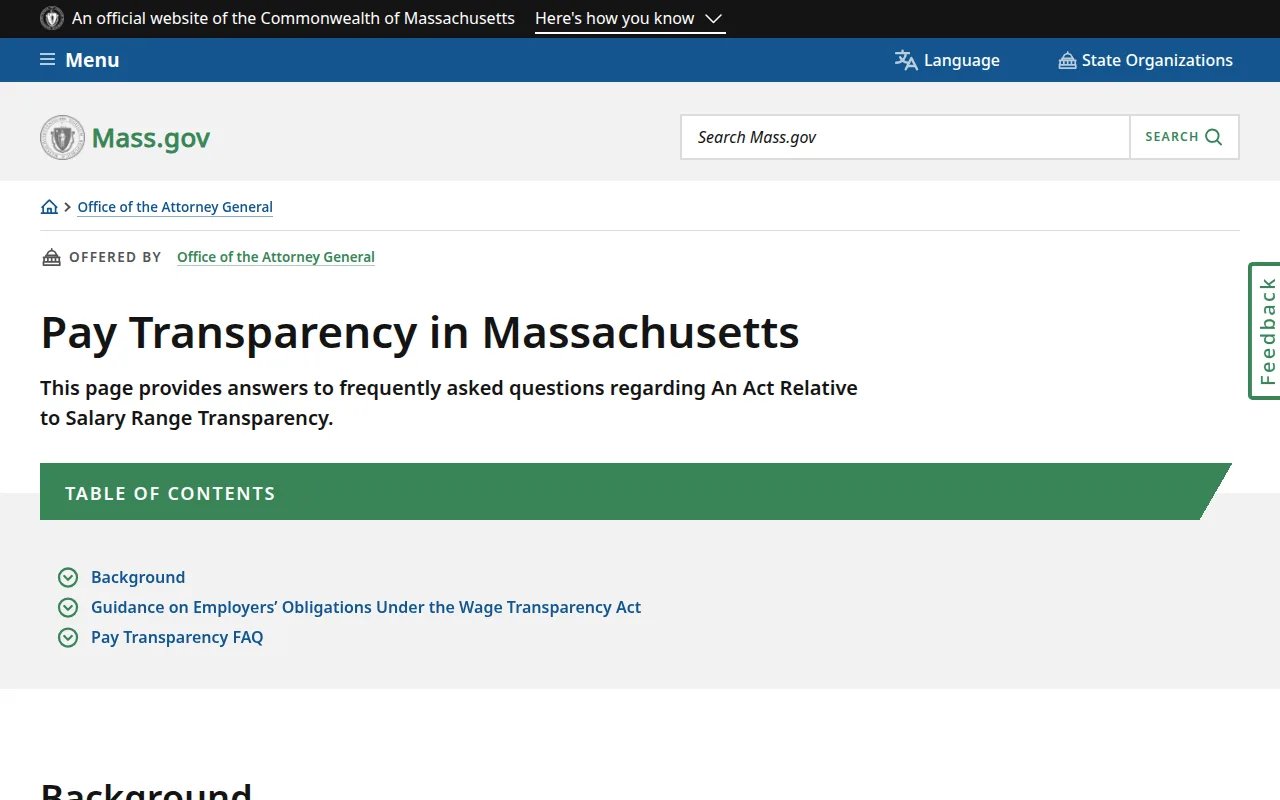
| Pay Transparency in Massachusetts / Mass.gov | Massachusetts pay transparency guidance | employers with 25 or more employees | wage ranges | Starting October 29, 2025 |
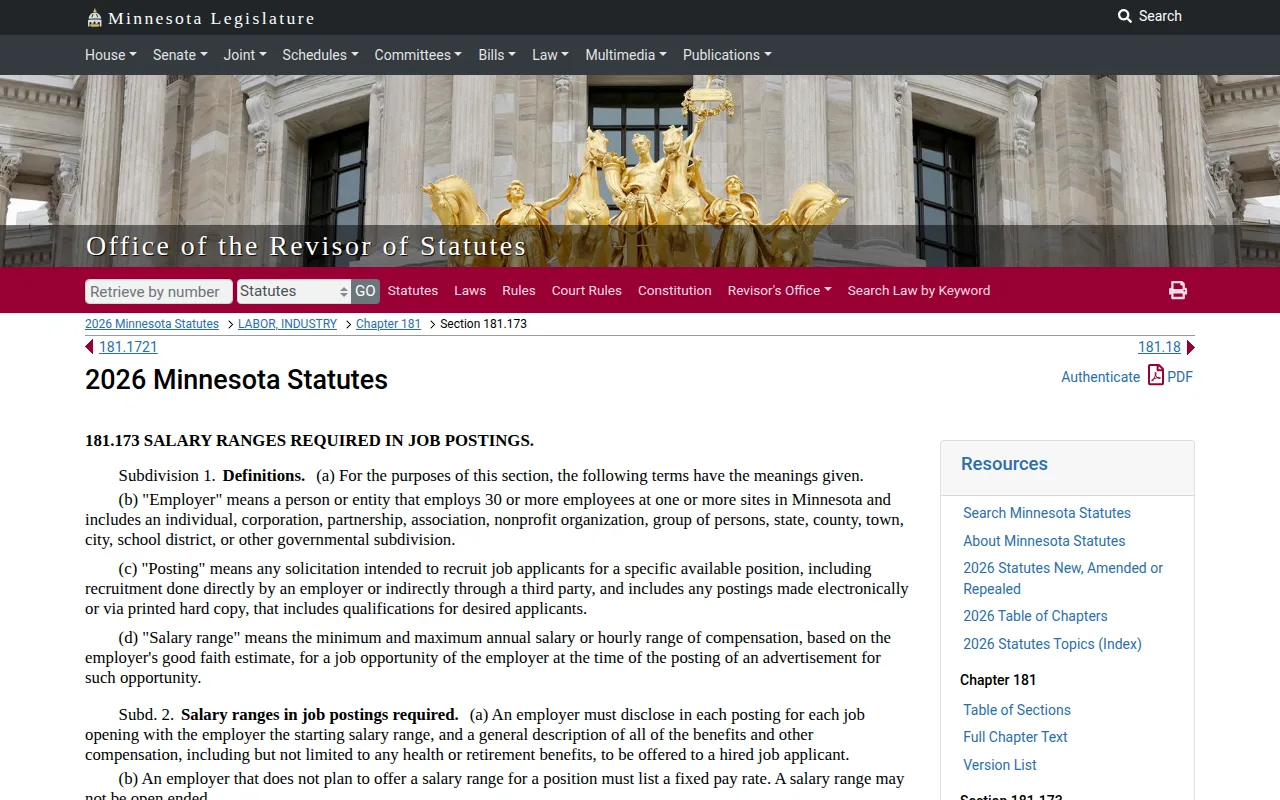
The table lists each law or state guidance page, the page it was read on, who must comply, what must be disclosed and when. Washington and Minnesota both tie disclosure to each posting for each job opening, which is the most direct comparison in the table. Minnesota’s row lists the starting salary range plus a general description of all of the benefits and other compensation, while Washington’s statute also asks for the wage scale or salary range together with a general description of all of the benefits and other compensation (app.leg.wa.gov). The Massachusetts row carries a start date, Starting October 29, 2025, and describes its disclosure as wage ranges. For a job seeker, the practical reading is that the thresholds and timing differ by state, so the same posting habit cannot be assumed everywhere.
Who is covered: employer size
Employer size decides whether a rule applies, and the pages use different cut-offs. Washington’s RCW 49.58.110 row covers employers with 15 or more employees. On the Minnesota revisor’s page, an employer means a person or entity that employs 30 or more employees at one or more sites in Minnesota (revisor.mn.gov). The New York State Department of Labor page says Labor Law Section 194-B applies to New York State businesses with four or more employees (dol.ny.gov). The Massachusetts guidance row covers employers with 25 or more employees.
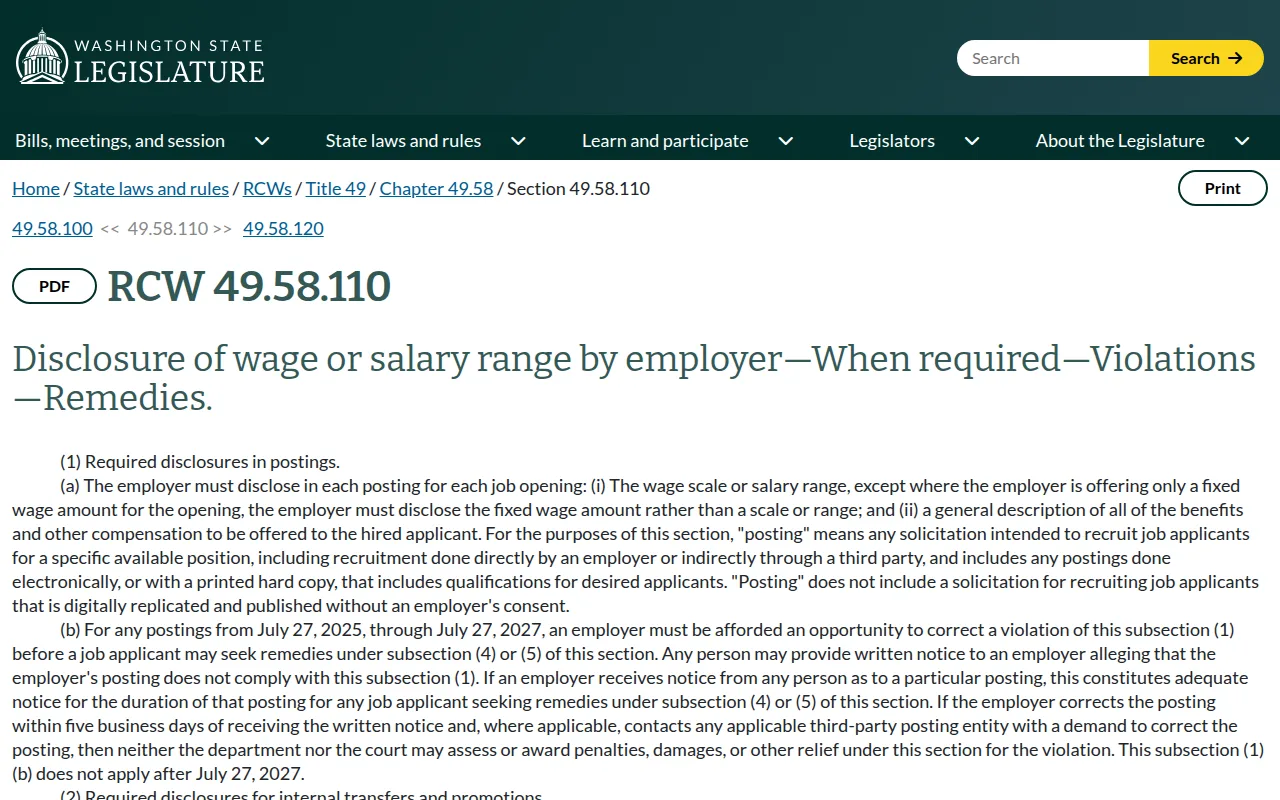
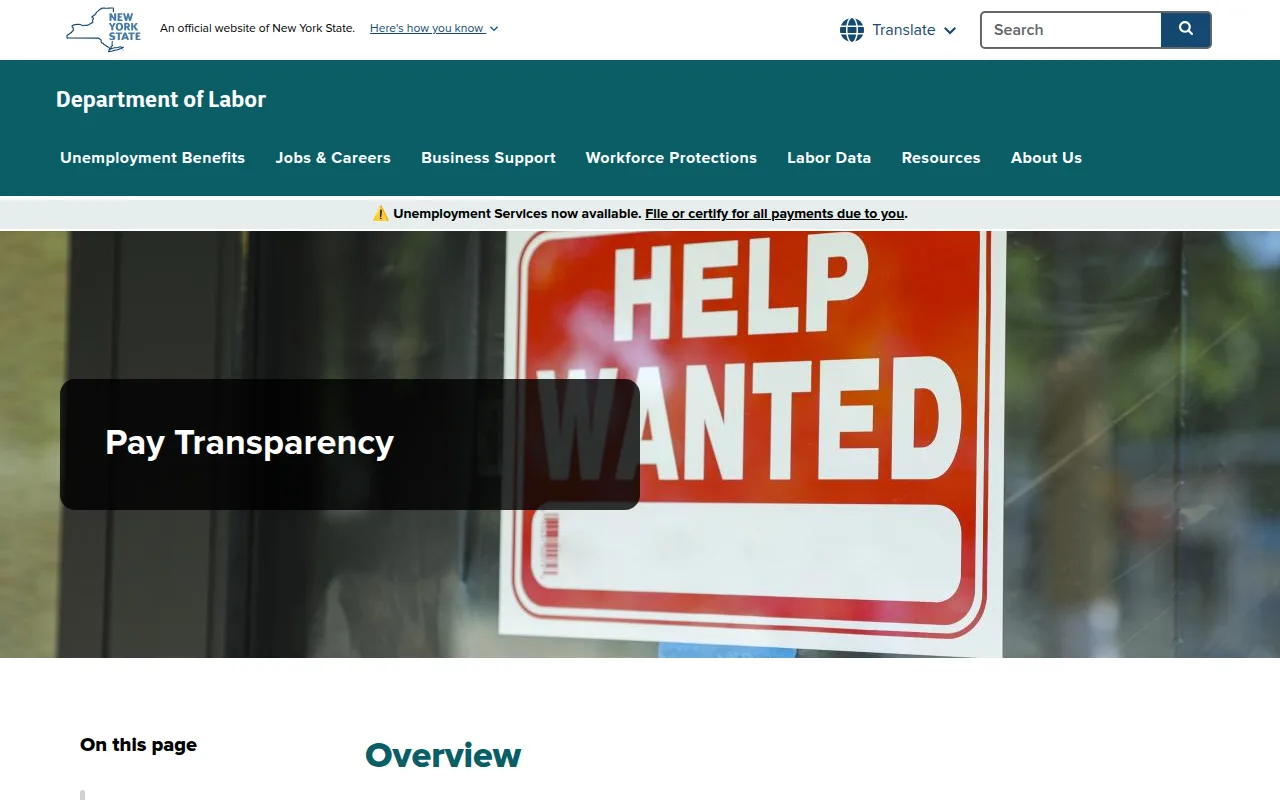
Comparing the rows, New York’s threshold of four or more employees is the lowest in the table, and Minnesota’s 30 or more is the highest. If you are applying to a small business, that gap matters: a small firm could fall under New York’s rule while falling outside the Minnesota definition, judging only from these figures. For Maryland, use the statute text itself when checking whether a specific employer is covered.
What must be listed in the posting
Maryland’s statute text has employers state the wage range, along with a general description of benefits and other compensation, in every public or internal posting for a position. That requirement covers positions physically performed at least in part in the state. Minnesota’s page requires the starting salary range in postings, and ranges may not be open ended. New York’s Department of Labor describes the requirement as providing job descriptions and listing compensation ranges.
For negotiation, this is the useful part: a range printed in the posting gives you an anchor before any conversation starts. Benefits and other compensation, where the Maryland and Minnesota rows require them, give you more items to discuss than base pay alone. The open-ended ban in Minnesota is worth noting too, because a range with no upper limit would give you little to work with.
When the disclosure arrives
Maryland’s main timing is also each public or internal posting, but it adds a fallback for applicants who were not shown a posting. The Washington and Minnesota rows place disclosure in each posting for each job opening. The Maryland row requires disclosure in each public or internal posting, and when no posting was made available to an applicant, it requires disclosure before a discussion of compensation is held with that applicant. The Massachusetts row gives Starting October 29, 2025 as its timing entry.
In practice, a posting-based rule lets you see the range before you apply, while a rule tied to the compensation discussion points to a moment later in the process.
Penalties in Massachusetts
The Massachusetts page lists penalties for a covered employer found to have violated the requirement (mass.gov). Among the Massachusetts penalties, the page names a fine of not more than $500 for the second offense. That figure belongs to the Massachusetts page only and should not be applied to the other states in the table. If a posting in Massachusetts lacks a wage range, the state’s own guidance is the place to check what a violation involves.
How we built this
Guide tablePay transparency rules in five US states: who must comply, what they must tell you and when
Every cell was read on the official page named in the column "Read on", on 2026-11-19: each value was taken with the line of the page that holds it, and our code kept it only when that line is on the page and holds the value word for word. An empty cell means no line of the page gave that value in a form our code could match.
Sources
The sources this article was written from. Links open the original page.